

Saltburn director Emerald Fennell is back with a new film, this time delivering yet another adaptation of Wuthering Heights by Emily Brontë, as if we haven’t already had enough of them. But that news wasn’t met with immediate distaste. Fennell proved herself to be an interesting artist in this day and age when she gave us Saltburn, a provocative and outrageous tale about an outsider who infiltrates and shatters an aristocratic family through grotesque acts. The film’s spectacle, fun, and daring energy felt like a much-needed breath of fresh air in an age of mundane art constrained by the shackles of wokeism.
Her new adaptation of Wuthering Heights was teased as following a similar style. Marketing materials gave the impression that this would be highly erotic, an unusual approach to a story we’re not exactly familiar with in that way. Predictably, a barrage of early criticism followed, with audiences instantly disliking the project due to doubts about its faithfulness to Brontë’s source material. Early critic reactions suggested the adaptation would be like Marmite — you’ll either love it or hate it. But the truth is, it falls somewhere in between. Its delivery isn’t polarising enough to truly anger one side or leave the other proclaiming it the best film in a generation. It’s not as provocative or outrageous as you might expect (to my disappointment), nor does it go out of its way to antagonise the “must be an exact replica of the book” purists.
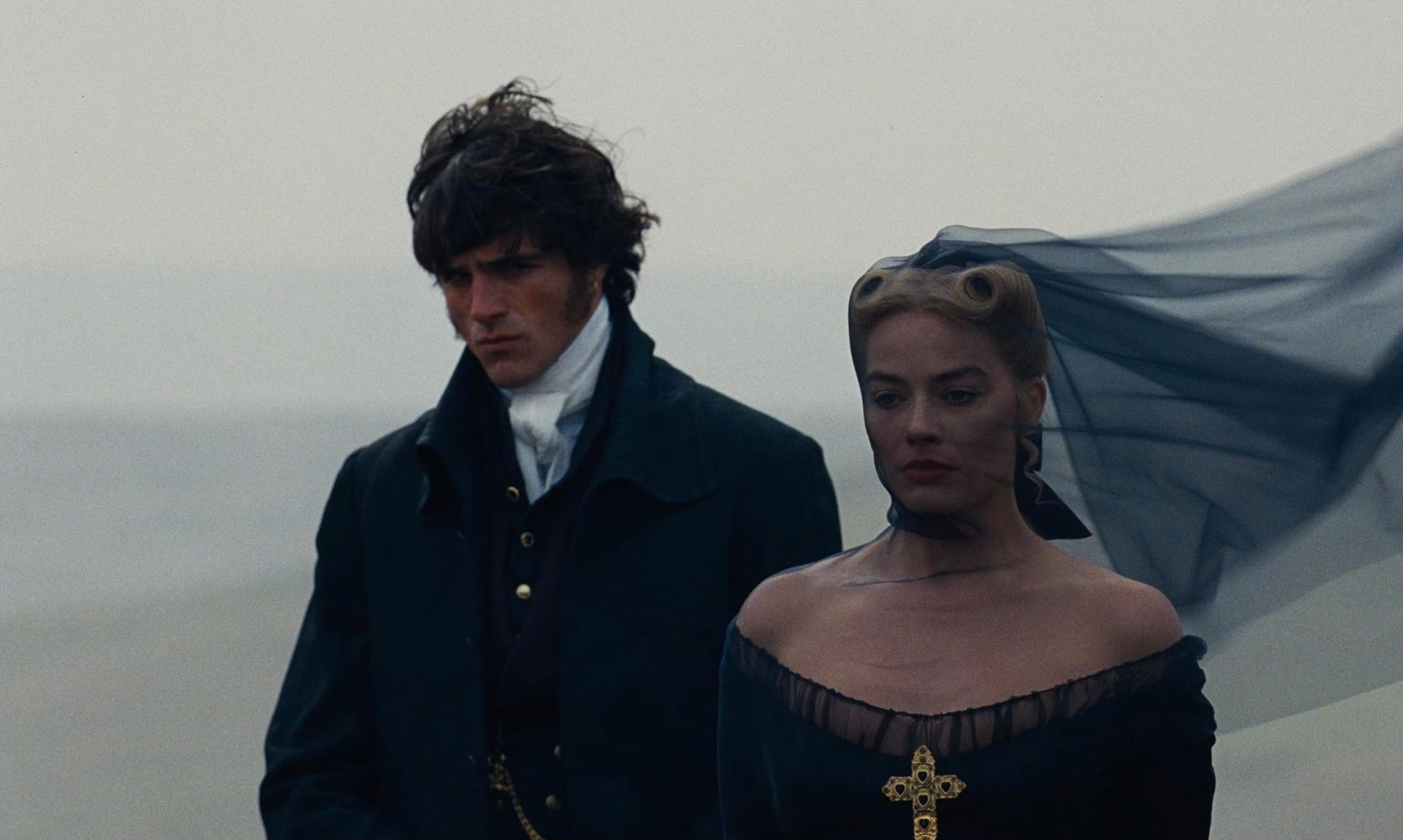
The film begins with a public hanging scene. Initially, this was reported to be far more explicit than what we ultimately see. World of Reel reported that test screening audiences described the scene as “descends into grotesque absurdity, as the condemned man ejaculates mid-execution, sending the onlooking crowd into a kind of orgiastic frenzy. A nun even fondles the corpse’s visible erection.”
I can confirm it’s not quite that explicit, even though part of me wishes it had been. If those early reports were accurate, it suggests the delivery was toned down slightly. Still, it’s a stark opening, something unfamiliar when engaging with this story.
From there, the pacing slows as we watch Heathcliff and Catherine as children. It feels like an introduction that must be endured, a necessary foundation to get out of the way. Thankfully, things pick up once we jump forward in time and the characters reach adulthood. There’s been minor controversy surrounding Jacob Elordi’s casting, with some condemning Fennell for choosing a white actor to play Heathcliff. Fennell explained, not that she should have to, that when she saw Elordi with sideburns on the set of Saltburn, he looked exactly like the illustration of Heathcliff in the first edition she read as a teenager, and that image captivated her. It’s a good thing she followed her instincts and cast Elordi alongside Margot Robbie. The two share genuine chemistry and, of course, are very attractive to watch. They form one of the most captivating cinematic couples to grace modern screens, a pairing many viewers will be grateful for after seeing this piece.
Once the eroticism begins, the film reaches its strongest point. You genuinely feel the sexual tension between them, and that authenticity works because you’ve already been seduced into caring about these characters on a deeply emotional level, again, thanks largely to the casting. Some may have expected soft-core porn, but it’s far from that. Instead, it’s an honest depiction of the sexual relationship the two might plausibly have had, and the lustful cues leading up to it. This isn’t sexual perversion; it’s romance uncensored.
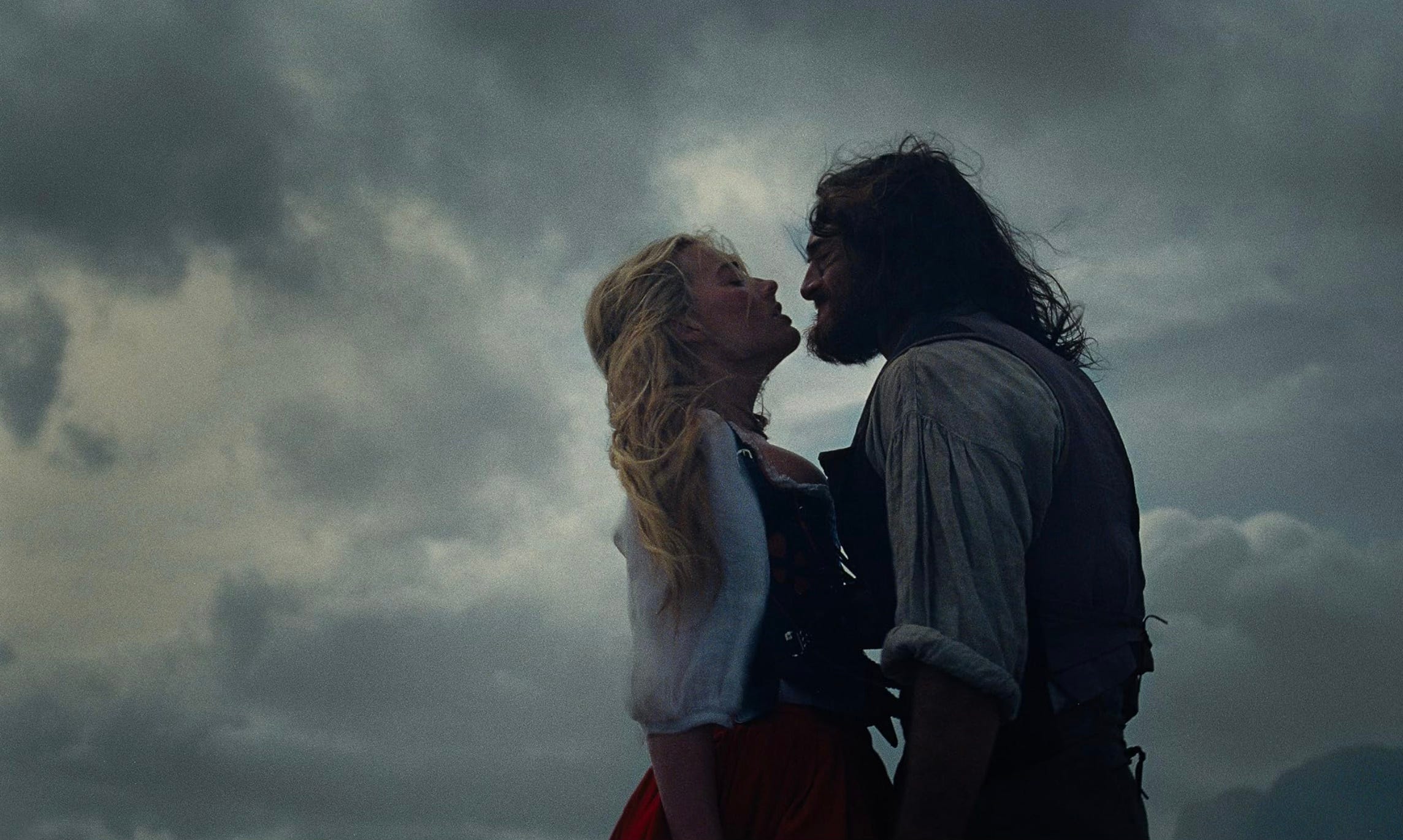
There is one particularly powerful moment during their sexual awakening that makes you sit upright and truly pay attention to the chemistry and lust unfolding to the point where you feel it yourself, as though you’re stepping into someone else’s wet dream. The moment is intensified by an impressive score from Charli XCX that feels surprisingly natural in context. You begin to believe the film will continue deepening its intensity, but I regret to say this scene marks its peak.
When cruelty enters, and the relationship turns twisted, it remains engaging, but not with the same force as what preceded it. You’re left disappointed that the film can move you so effectively through eroticism yet fails to sustain that same emotional charge in its darker passages. When tragedy strikes, you want it to hit with devastating force, but there simply isn’t enough momentum behind it. That’s not to say you feel nothing for the characters; it’s just not quite painful enough. I wanted to leave the cinema broken, emotionally wounded, something previous adaptations have failed to achieve, and something I hoped this one might finally deliver. Some might call that sick or twisted. I’d argue it’s reasonable to want art to devastate you, to shake you from the mundanity of everyday life and make you feel something rare.
Wuthering Heights had the potential to create a lasting impact, and at moments it does — it just doesn’t sustain that power all the way through. The film isn’t perfect, but of all the adaptations I’ve seen, this is by far the most interesting and engaging, even if it didn’t become the provocative, erotic masterpiece I had envisioned.
If Wuthering Heights didn’t already exist as a beloved novel and this were presented as an original story, I doubt it would face the same level of backlash. There seems to be a default obsession among certain audiences to judge an adaptation purely on its faithfulness to the source material. I’d argue films aren’t obligated to replicate a novel with precision. An adaptation should bring something new; otherwise, you might as well direct audiences back to the book. These projects shouldn’t be translation exercises — though, for some, that framework offers an easy target for critique.
Fennell’s conceptual approach is, in itself, deeply interesting. She explained that she set out to create the version of the story she imagined when she first read the novel at fourteen, one that emphasised its sadomasochistic undertones. It was a remembered version that isn’t entirely real, shaped by adolescent imagination, including moments she wished had happened but never did. In that sense, she placed Wuthering Heights in quotation marks. I much prefer this imaginative approach over a strict translation. If there’s something cinema desperately needs, it’s bold, interesting storytelling. It’s just a shame this film doesn’t fully commit to the individuality it so confidently teased before release.