

Watch the video review above
28 Years Later: The Bone Temple is the sequel to 28 Years Later, a film that, while not flawless, stood out as an impressive contribution to British cinema. What made that film memorable was its boldness, particularly its visual style and experimental techniques rarely seen in large-scale British releases.
28 Years Later ended on a provocative note with the introduction of a gang dressed as Jimmy Savile, taking in the young boy, Spike. It was a striking and controversial image, and one I welcomed, even if it felt frustrating that audiences who often criticise artists for exploring difficult terrain seemed comfortable with this particular provocation. As ever, acceptable controversy appears to be selectively applied.
The Bone Temple picks up with Spike’s return and immediately makes its intentions clear. This is not a film primarily about the infected, but about the nature of evil, specifically, humanity’s capacity for it. The infected take a back seat here, and I wouldn’t be surprised if The Last of Us Part II influenced screenwriter Alex Garland with its similar focus on human behaviour rather than monsters.
During an interview, Alex Garland said this film explores the idea of a misremembered past, where society cherry-picks comforting nostalgia while ignoring its darker realities. Jimmy Savile becomes a powerful symbol of this, a figure whose crimes were unknown to the public before the Rage outbreak in 2002, allowing him to retain the image of a national treasure while concealing a horrific reality. Garland contrasts the sense of progress he remembers growing up with what he sees as a cultural regression today, where demagogues and cult leaders employ nostalgia to seduce and manipulate followers.
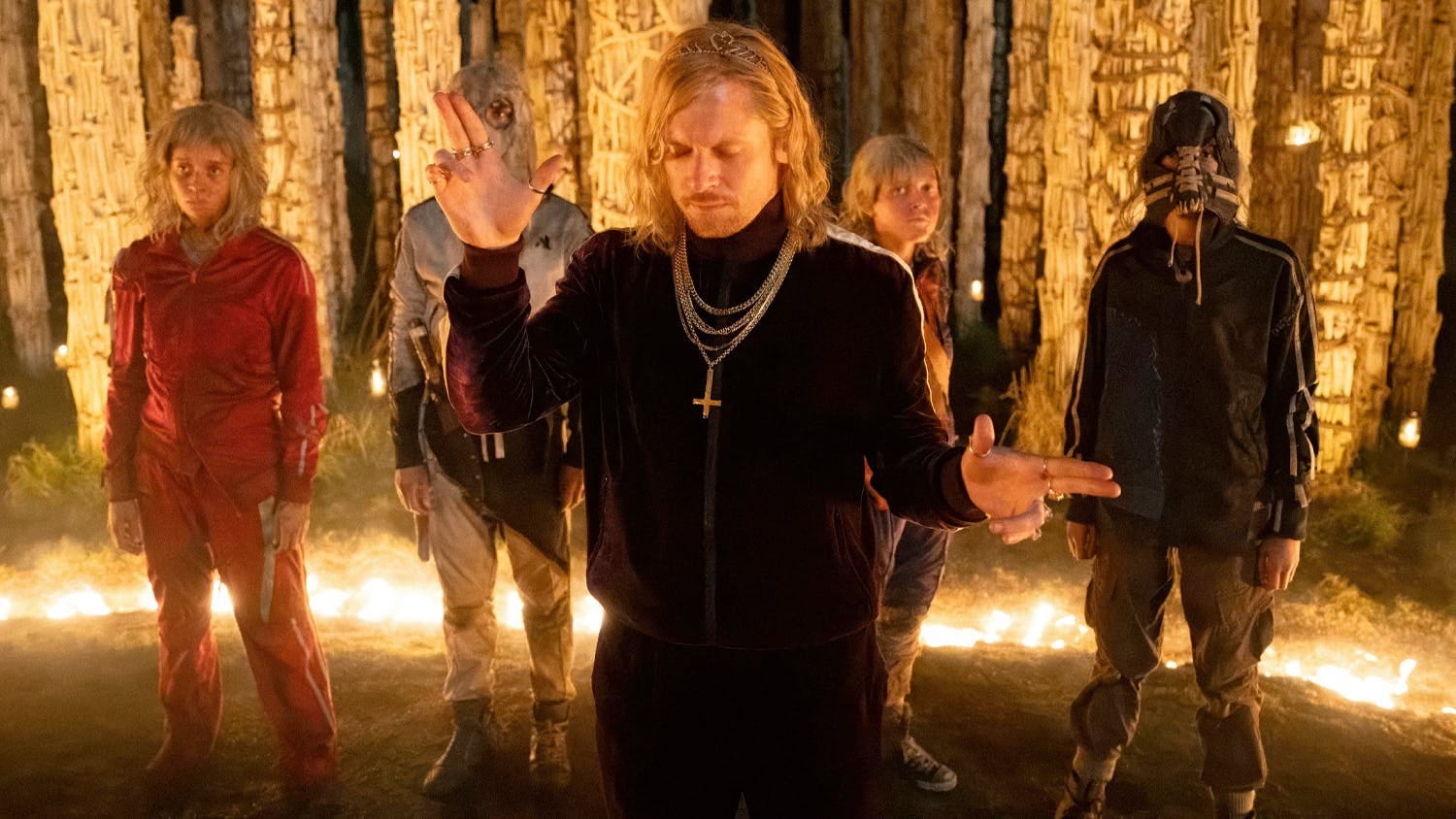
This is embodied in Jimmy Crystal (Jack O’Connell), the leader of the Savile-inspired gang. The film opens with a brutal scene in which Spike is forced to fight another gang member with a knife. It’s an early sequence I won’t spoil, but it efficiently establishes the group’s cruelty, and the violence only escalates as the film progresses.
The film’s brutality is reminiscent of the New French Extremity movement, unafraid to linger in deeply uncomfortable territory. The group’s indifference to their victims and the lack of empathy shown during their most harrowing acts is genuinely disturbing. Yet this is not violence for its own sake; it serves the film’s intelligent and focused examination of evil.
Running parallel to this storyline is the return of the lone doctor from the first film, played by Ralph Fiennes. He develops a fascination with an Alpha infected named Samson, supplying him with morphine as part of an experiment that evolves into a strangely humorous relationship. Though this subplot initially feels disconnected, it eventually intersects with the Jimmy’s narrative, reinforcing the film’s central concern with the nature of evil.
The Bone Temple establishes itself as an intellectual and philosophical film through its main subject matter, far more so than any previous entry in the series. It’s arguably the most interesting installment yet.
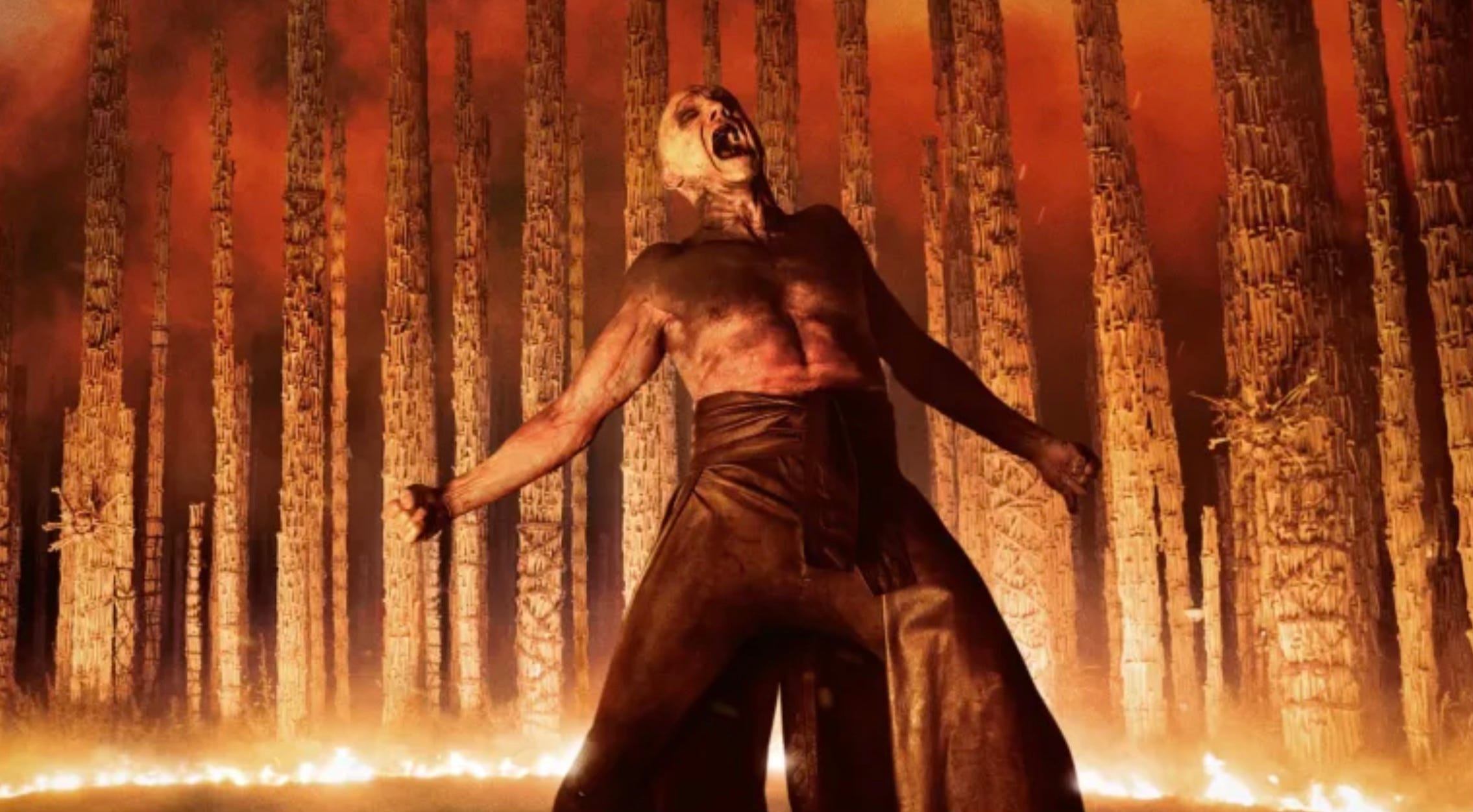
Despite its heavy themes, the film is also surprisingly fun. There’s humour woven throughout, and the overall tone feels closer to a spin-off than a direct sequel. It doesn’t feel like a plot that naturally follows the events of the first film, but rather a separate story that exists within the same world, despite the return of familiar characters. Where the first film felt bold because of its filmmaking, The Bone Temple feels bold because of its narrative direction.
British cinema feels exciting again here. And despite Garland’s critiques of nostalgia, there’s a satisfying throwback to the brutal horror of the 2000s, films like Hostel (2005) and Wolf Creek (2005), where violence was visceral and uncompromising.
Is the film political? To a degree, yes, particularly in its surprising ending, which is more on the nose. But for those wary of politics being shoehorned into modern cinema, this is not an extreme case, and it never distracts from the film’s considerable strengths.
Ultimately, 28 Years Later: Bone Temple is a challenging, provocative, and confident piece of filmmaking, and a great way to kick off 2026.